
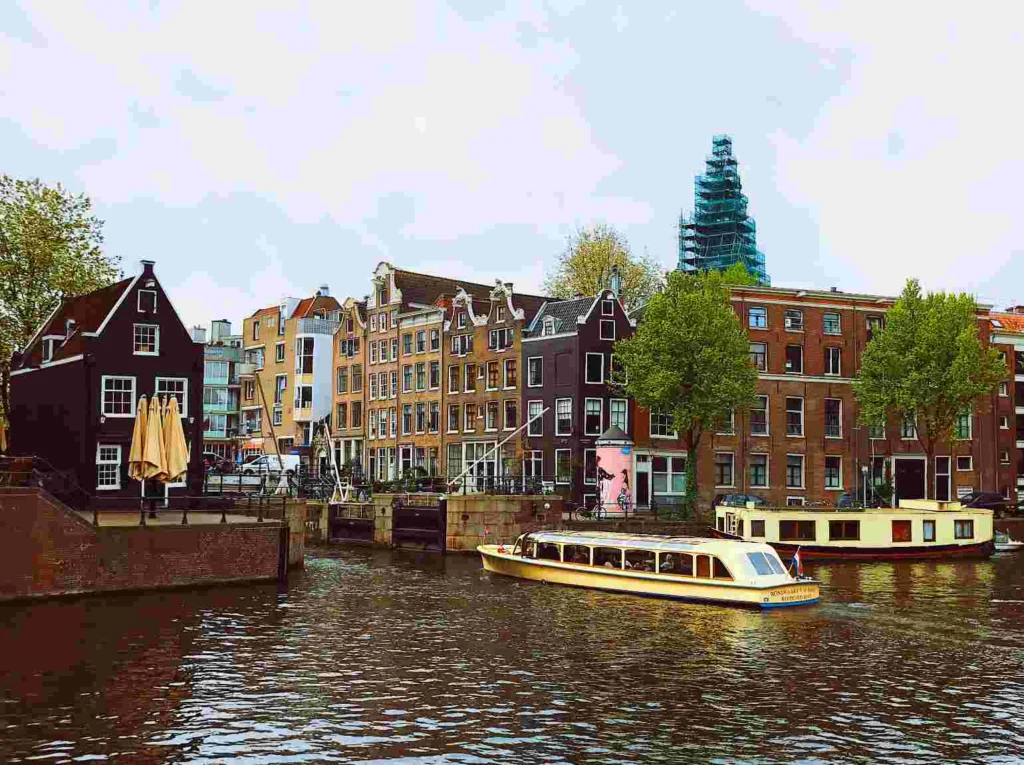
The Netherlands is one of Europe’s most competitive and business-friendly economies, serving as the gateway to the European Union market. Located strategically in Western Europe, it offers excellent logistics infrastructure and access to over 500 million EU consumers. The economy is highly developed and diversified, with services accounting for approximately 70% of GDP, industry contributing around 17%, and agriculture about 2%. Key growth sectors include technology, logistics, agriculture, energy, and financial services. The Netherlands consistently ranks among the top countries globally for innovation, competitiveness, and ease of doing business.
Unlock growth opportunities in the Netherlands with Cerity Global as your trusted partner. We offer end-to-end support for establishing your legal entity, navigating Netherlands’s often complex regulatory landscape with clarity and efficiency.
From company registration to ongoing back-office support, including HR, payroll, benefits, accounting, tax and compliance, Cerity Global simplifies the process so you can focus on growing your business.
Need to hire quickly before your entity is set up? We offer interim EOR services in the Netherlands, enabling you to onboard talent fast. Once your entity is established, we ensure a smooth transition of your employees from the EOR Structure to your own legal entity, without disrupting payroll or compliance.
Our experts stay ahead of regulatory changes to keep your operations aligned with Netherlands’s employment and tax laws, helping you scale confidently and compliantly.
The most popular form of business entity for foreign investment in the Netherlands. A BV is a private limited liability company offering strong liability protection and operational flexibility. It can be established by one or more shareholders with a minimum share capital of just €1. The liability of shareholders is limited to their capital contributions. This entity type provides maximum versatility for business operations and is ideal for most international businesses seeking EU market access.
A public limited company suitable for larger operations requiring significant capital investment or public offerings. Requires minimum share capital of €45,000, of which at least 20% must be paid up at incorporation. Governed by a supervisory board and management board structure for larger companies, making it ideal for companies planning stock exchange listings or substantial growth with external investors.
Allows foreign companies to conduct business activities in the Netherlands under the parent company’s name. Requires registration with the Chamber of Commerce (KVK) and compliance with local regulations for operational activities. No minimum capital requirement, but the branch operates under the liability of the parent company. Must maintain local accounting records and file annual reports.
A limited presence allowing foreign companies to conduct market research, liaison activities, and represent the parent company’s interests in the Netherlands. Cannot engage in commercial activities or generate revenue locally. Suitable for companies exploring the Dutch and EU markets before full establishment.
No legal requirement for a Dutch resident director. Foreign nationals can serve as directors, providing complete flexibility for international companies. However, having a local representative can facilitate banking relationships, government interactions, and demonstrate commitment to the Dutch market.
Must have a management board (at least one member) and may require a supervisory board depending on size. No residency requirements for board members, allowing full foreign ownership and management. Larger companies must comply with additional governance requirements.
Requires appointment of a person authorized to represent the branch, who must be registered with the Chamber of Commerce. This person is responsible for the branch’s activities and compliance with Dutch regulations, including filing requirements and tax obligations.
Must appoint a chief representative who is responsible for the office’s activities and compliance with Dutch regulations. Registration required with relevant Dutch authorities and Chamber of Commerce.
Dutch bank account setup follows EU banking compliance procedures and offers excellent international connectivity:
Bank Account Setup in The Netherlands: What’s Possible and When
Before Incorporation:
After Incorporation:
Note:
All banking activities must comply with EU anti-money laundering regulations and Dutch banking law (Wet ter voorkoming van witwassen en financieren van terrorisme).
Required documents include the Chamber of Commerce extract (KVK uittreksel), articles of association, directors’ identification documents, proof of registered office address, and tax registration documents.
Banks increasingly request in-person verification for directors or ultimate beneficial owners. Remote setup is possible but subject to enhanced due diligence
Cerity Global supports companies in their global expansion plans and helps in legal entity setup, registration and ongoing support services. With us, you can quickly set up a legal entity, operate compliantly, and expand globally. The process typically takes a few days to a week, depending on the bank.
Employment in the Netherlands is primarily governed by the following laws:
Employment contracts must be in writing in the Netherlands for contracts exceeding 4 weeks and provided to employees within one month of commencement.
Some of the standard details mentioned in the written contract include:
The different types of employment relationships are:
Permanent Employment Contract (Vast Contract)
The standard form of employment providing ongoing job security and comprehensive employment protections. Provides full access to statutory benefits and strongest employee protections under Dutch employment law. Can be full-time or part-time arrangements.
Fixed-Term Employment Contract (Tijdelijk Contract)
Used for temporary positions with specific end dates or completion of particular projects. Maximum of three consecutive fixed-term contracts over 24 months before automatic conversion to permanent employment. Provides same entitlements as permanent employment during the contract term.
Zero-Hours Contract (Nul-urencontract)
Flexible employment arrangement where employees are called to work as needed without guaranteed minimum hours. Provides some employment protections but with variable income and working patterns. Suitable for seasonal or highly variable business needs.
The Netherlands allows probationary periods with specific duration limits:
The standard working hours in the Netherlands are typically 8 hours per day and 40 hours per week. The Working Hours Act sets maximum limits of 12 hours per day and 60 hours per week, with averaging periods allowed under collective agreements.
Overtime
The Working Hours Act (arbeidstijdenwet) establishes maximum daily and weekly limits for employees aged 18 and over. While employees can work up to 12 hours per day and 60 hours per week, these maximums cannot be allowed every week.
An employee may work an average of:
Notice periods in the Netherlands vary based on length of service:
Severance pay (transitievergoeding) is mandatory for dismissals, calculated as one-third month salary per year of service for the first 10 years, plus half a month’s salary per year thereafter.
EU/EEA and Swiss citizens can live and work in the Netherlands without restrictions. However, non-EU/EEA nationals must obtain appropriate work authorization before beginning employment.
Work Visa & Permit Options in The Netherlands
1. Single Permit (Gecombineerde vergunning)
Combines residence and work permits for non-EU nationals employed by Dutch companies.
2. EU Blue Card
For highly skilled professionals with university degrees and high-salary job offers.
3. Highly Skilled Migrant Scheme
For skilled workers employed by recognized sponsors.
Key Notes:
New Zealand’s immigration policies are dynamic and subject to frequent updates — always consult the latest official guidelines to ensure compliance before initiating employee relocation or hiring.
Employees are entitled to a minimum of 20 days (4 weeks) paid annual leave per year. Many collective agreements provide additional days, with 25-27 days being common. Part-time employees receive proportional entitlements based on working hours.
Female employees are entitled to 16 weeks of maternity leave – 4-6 weeks before birth and minimum 10 weeks after birth. Maternity leave is paid at 100% of salary up to the daily maximum, funded by employee insurance (WW/ZW system)
Partners are entitled to one week of paid partner leave at 100% salary, plus an additional 5 weeks of paid parental leave at 70% of salary (up to statutory maximum). Leave can be taken flexibly within 6 months of birth or adoption.
Each parent is entitled to 26 times their weekly working hours of unpaid parental leave, to be taken before the child’s 8th birthday. Some employers provide (partial) payment during parental leave as additional benefit.
The following statutory national holidays are observed in the Netherlands:
Payroll frequency in the Netherlands is typically monthly, with salary payments required by the end of each month. Some companies pay mid-month advances with final payment at month-end.
The Netherlands requires payment of holiday allowance (vakantiegeld) equal to 8% of annual gross salary, typically paid in May. A 13th month bonus is not legally required but may be provided under collective agreements or employment contracts.
The Netherlands has a comprehensive social security system with mandatory contributions:
The mandatory benefits in the Netherlands include:
Dutch accounting follows Dutch GAAP based on EU directives, with larger companies also required to comply with International Financial Reporting Standards (IFRS).
All Dutch companies must file annual financial statements with the Chamber of Commerce.
Mandatory audit required for companies meeting certain criteria:
Medium-sized companies may opt for limited review instead of full audit.
The standard corporate income tax rate is 25.8% for profits above €200,000.
A reduced rate of 19% applies to profits up to €200,000, benefiting smaller companies and startups
The standard VAT rate in the Netherlands is 21%.
Reduced rates of 9% apply to specific goods and services (food, books, medicines, etc.). A 0% rate applies to exports and certain international services. VAT registration is mandatory for businesses with annual turnover exceeding €20,000.
The filing deadline for annual corporate income tax returns is typically 5 months after the end of the financial year, with extensions possible up to 8 months.
Penalties include interest on unpaid taxes, administrative fines for late filing, and potential criminal liability for serious tax evasion. The Dutch Tax Administration has comprehensive penalty and interest regimes.
The Netherlands has comprehensive transfer pricing rules aligned with OECD guidelines:
The Netherlands implements CbC reporting requirements:
Transfer pricing documentation is mandatory for Dutch companies involved in controlled transactions exceeding specified thresholds.
Master File
Local File
Deadline: Transfer pricing documentation must be available upon request by tax authorities, typically within specified timeframes following a formal request.
The Netherlands implements the EU General Data Protection Regulation through the Dutch Data Protection Implementation Act, providing comprehensive data protection framework.
The Netherlands’ AML framework is governed by the Money Laundering and Terrorist Financing (Prevention) Act (Wwft), implementing EU AML directives.
Obligated entities: Banks, insurance companies, trust offices, accountants, lawyers, real estate agents, and other financial service providers.
Key requirements:
Penalties: Administrative fines up to €4 million or 10% of annual turnover, criminal liability, and potential license revocation for violations.
Reasons you should setup legal entity in the Netherlands:
Cerity Global ensures your business expansion in the Netherlands is fast, compliant, and future-ready, so you can focus on growth while we manage the back-office tasks.
Economic figures are subject to change based on quarterly reports and market conditions.
Cerity Global combines deep local knowledge with proven expertise to make your Netherlands business establishment effortless and compliant. Whether you’re looking for legal entity setup and registration or ongoing support, we’re your trusted partner for sustainable global expansion in the Netherlands.
Disclaimer – The information provided is for informational purposes only and does not constitute legal, business, or tax advice. Entity setup requirements, tax rates, and economic data are subject to change and may vary by location.
To discuss your needs and how we can help you achieve a compliant and efficient expansion.