
Introduction
Expanding into a new market involves more than setting up a business and hiring local employees. Companies also need to understand the rules and processes involved in paying their workforce.
Payroll requirements differ from one country to another. Tax deductions, employer contributions, employee benefits, employment costs and reporting deadlines all affect how salaries are calculated and paid. A process that works in one market may not meet the requirements of another.
If businesses apply their domestic payroll procedures without checking local rules, they may make incorrect payments, miss deadlines or face unexpected costs. These issues can become harder to manage as the workforce grows across different countries.
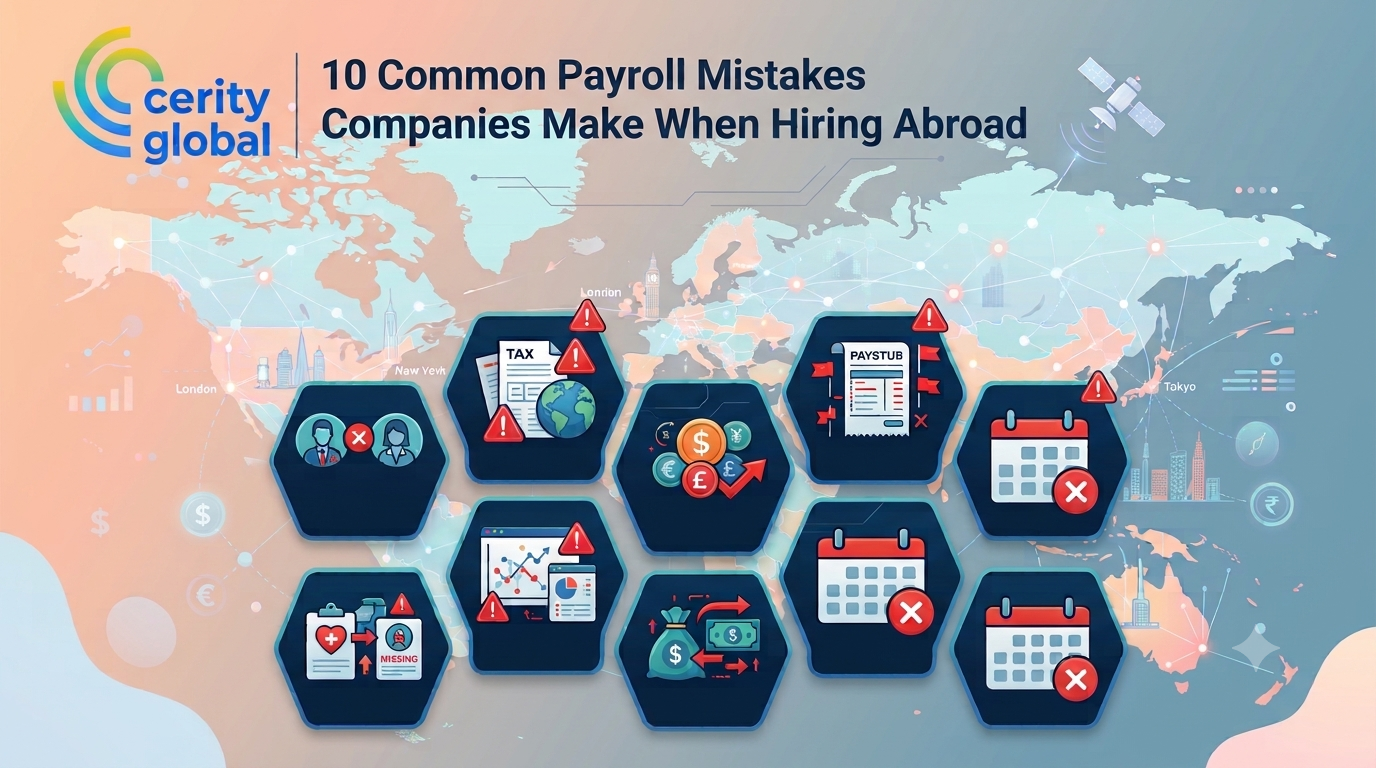
Understanding the common international payroll mistakes can help businesses prepare before hiring abroad. Here are ten areas that need attention and what companies can do to avoid these problems.
1. Starting International Hiring Without Proper Payroll Setup
Hiring an employee in another country requires some preparation beyond recruitment and onboarding. Businesses need to understand how payroll will work in that market and what must be in place before the employee starts.
This may include employer and tax registrations, local salary and deduction rules, employee documents, payment schedules and reporting deadlines. The requirements depend on the country, so businesses should not assume that their existing payroll process will work in a new market.
If these steps are missed, salary payments may be delayed, deductions may be calculated incorrectly and required filings may not be completed on time. Correcting these issues can also create additional work for HR and finance teams.
How to avoid it
Check the payroll requirements of the country before confirming an employee's start date. Prepare a checklist covering registrations, employee documents, payment schedules and filing deadlines. Assign responsibility for each task so the teams involved know what needs to be completed.
2. Misclassifying Employees as Independent Contractors
Hiring someone through an independent contractor agreement does not automatically make that person a contractor under local law. The classification depends on the rules in the country and the actual working relationship between the business and the individual.
For example, a company may hire someone under a contractor agreement but exercise significant control over their working hours, responsibilities and day-to-day activities. Depending on local law, these factors may indicate that the person should be treated as an employee.
Misclassification can leave businesses responsible for unpaid employment taxes, social security contributions, statutory benefits and other liabilities. The consequences depend on the country's laws and the circumstances of the arrangement.
How to avoid it
Check local employment rules before deciding how to engage someone overseas. Review the person's role, responsibilities and working arrangements rather than relying only on the contract. If the arrangement changes over time, review the classification again. A local employment or tax adviser can help when the position is unclear.
3. Applying the Wrong Tax Rules
Tax rules are not the same in every country. Businesses hiring internationally need to understand how income tax, employee deductions and employer contributions are calculated in each market.
For example, payroll calculations may depend on local tax rates, income thresholds and employee details. Employers may also need to account for social security and pension contributions. Bonuses, commissions and allowances can have different tax treatments depending on local rules.
These requirements can change. If a business continues using outdated tax rates or contribution limits, employees may receive incorrect payments, and the company may fail to meet its tax obligations.
How to avoid it
Keep payroll information updated for every country where the business employs people. Check tax rates, thresholds and contribution requirements against official guidance before processing payroll. Review calculations when tax rules change or an employee's pay structure is revised.
4. Underestimating the Full Cost of Employment
The salary agreed with an employee is not always the full cost of hiring them. Businesses also need to account for employer contributions, statutory benefits and other employment-related expenses when preparing their budgets.
Depending on the country, employers may have to contribute to social security schemes, pension funds and employee insurance. Other costs may include statutory bonuses, paid leave and benefits required under local employment laws.
When these expenses are not included in the initial budget, the actual cost of hiring can be higher than expected. This can affect workforce planning, especially when a business is hiring several employees in a new market.
How to avoid it
Prepare a country-specific employment cost estimate before approving the hiring budget. Include the gross salary, employer contributions, mandatory benefits, insurance and other applicable expenses. HR and finance teams should review these figures together, so the business has a clearer picture of the total cost.
Are you accounting for the full cost of hiring?
Talk to a Cerity Global Expert →5. Missing Payroll Deadlines and Statutory Filings
Paying employees on time is only one part of payroll management. Businesses must also meet local deadlines for tax payments, payroll declarations and statutory reporting.
Depending on the country, employers may need to submit employee payroll information to tax authorities, deposit deducted taxes and report social security contributions within specified periods. Annual statements and year-end filings may also be required.
Missing these deadlines can lead to penalties, interest charges and additional reporting work. The task becomes more difficult when a business employs people in several countries, as each market may follow a different filing schedule.
How to avoid it
Maintain a separate compliance calendar for every country where the business has employees. Include salary payment dates, tax deposits, filing deadlines and annual reporting requirements. Assign a person or team to track each deadline and confirm that the required work has been completed.
6. Overlooking Mandatory Employee Benefits
Employee benefits and entitlements vary across countries. A benefits policy used in the home market may not meet the employment requirements that apply to overseas employees.
Depending on local law, employers may need to provide paid annual leave, sick leave, public holidays, overtime payments and other statutory entitlements. Minimum wage rules, working hours, pension payments and social insurance contributions can also affect payroll.
If these requirements are missed, employees may be underpaid or receive fewer benefits than they are legally entitled to. Businesses may also face employment disputes or compliance issues.
How to avoid it
Review the local employment requirements before finalising an employee's compensation package. Check minimum wage, working hours, leave entitlements, overtime rules and mandatory contributions. Make sure the payroll process accounts for these requirements when calculating employee payments.
7. Making Currency Conversion and Payment Errors
Paying employees in different countries also means dealing with different currencies, exchange rates, bank charges and transfer timelines. Errors in these areas can affect the amount employees receive or delay their salary payments.
For example, a company may calculate payroll in its home currency but transfer salaries in the employee's local currency. Exchange rate changes and conversion fees can affect the final amount. International transfers may also take longer, and incorrect bank details can cause payments to be rejected or delayed.
These problems can create confusion for employees and make it harder for finance teams to match payroll records with the payments made.
How to avoid it
Set clear rules for salary currencies, exchange rate calculations, transfer fees and payment dates. Check employee bank details before processing payments and allow enough time for international transfers. After each payroll cycle, compare the payment records with the amounts employees were expected to receive.
8. Maintaining Incomplete Payroll Records
Payroll records help businesses track employee payments, prepare financial reports and respond to questions about salaries and deductions. When information is missing or difficult to access, it becomes harder to check whether employees have been paid correctly.
These records may include payslips, salary details, tax deductions, employer contributions and changes to employee compensation. Businesses may also need to keep supporting documents and payroll reports for specific periods, depending on local rules.
Incomplete records can create problems during audits, tax reviews or disputes over salary payments. They can also make it difficult to explain how a payment was calculated or confirm that the correct deductions were made.
How to avoid it
Keep payroll records organised for each country. Update them whenever employee details or compensation change and make sure authorised team members can access the information they need. Follow local record-retention requirements and use appropriate access controls to protect confidential employee information.
9. Failing to Coordinate HR, Finance and Payroll
International payroll involves information from different teams. HR manages employee details and changes to employment terms, finance handles budgets and payments, and payroll teams use this information to calculate salaries and deductions.
Problems can arise when these teams do not share updates on time. For example, HR may revise an employee's salary or employment status without informing payroll before the next payment cycle. Changes to bonuses, allowances or bank details can also be missed. Manual data entry between systems may introduce further errors.
This can result in incorrect salary payments, delayed adjustments and extra work to correct records. It can also be difficult to identify who is responsible for resolving an issue when approval processes are unclear.
How to avoid it
Set clear procedures for sharing employee information and approving payroll changes. HR, finance and payroll teams should know who is responsible for updating records, checking calculations and authorising payments. Regularly compare employee records, payroll reports and financial records to identify differences before payments are processed.
Are your HR, finance and payroll teams aligned?
Talk to a Cerity Global Expert →10. Treating Payroll Compliance as a One-Time Task
Setting up payroll correctly at the beginning does not mean the same process will remain suitable over time. Tax rates, contribution limits, reporting requirements and employment rules can change. These changes may affect how businesses calculate salaries and meet their obligations.
Employee circumstances can also change. A salary revision, bonus, change in working arrangements or new benefit may require an update to payroll calculations. If these changes are not recorded and reviewed, businesses may continue using outdated information.
This requires regular attention, particularly for companies operating in several countries. A process that met local requirements last year may need to be updated.
How to avoid it
Review payroll procedures at regular intervals and keep track of changes to local tax and employment rules. Update calculations, employee records and compliance calendars when required. Checking completed payroll cycles can also help businesses identify errors that keep occurring and address them before they affect more employees.
How to Build a Better International Payroll Process
Managing payroll in different countries takes planning and coordination. Businesses need to understand local requirements, keep employee information accurate and make sure payment and reporting tasks are completed on time.
A few steps can help establish a clear process:
- Check local requirements before hiring. Find out which registrations, employment rules and payroll obligations apply in the country.
- Calculate the full employment cost. Include salaries, taxes, employer contributions, mandatory benefits and other applicable expenses.
- Keep track of deadlines. Maintain country-specific calendars for salary payments, tax deposits and statutory filings.
- Keep employee information up to date. Make sure HR, finance and payroll teams share changes to salaries, benefits and personal details.
- Review payroll regularly. Check salary calculations, payment records and reporting procedures, and update them when requirements change.
Businesses should also decide who is responsible for each part of the process and how payroll errors will be corrected. This becomes increasingly important as the workforce grows across more markets.
When Should Businesses Seek External Payroll Support?
Managing payroll internally may become difficult when a business starts hiring in several countries. Each market has its own tax rules, employment requirements, reporting deadlines and payment procedures. Keeping track of all these details can take time, particularly when the business does not have local expertise.
External support may be useful when a company enters a new market, hires its first overseas employees or needs help understanding local business requirements. The type of support required will depend on the country and the company's operations.
Cerity Global supports businesses with international expansion requirements across 170+ countries. Its services include support for areas such as HR, payroll and benefits, alongside other business setup and compliance requirements. Businesses can explore the available services to understand what support may be relevant to their expansion plans.
Conclusion
Hiring employees in another country brings payroll responsibilities that businesses need to understand before they start operating in that market. Tax deductions, employment costs, statutory benefits and reporting deadlines all need attention. Missing any of these requirements can affect salary payments and create compliance problems.
A clear payroll process, accurate employee records and regular reviews can help businesses manage these responsibilities as their international workforce grows. For companies entering new markets, understanding local requirements early can also make the hiring process easier to manage.
Make international payroll easier to manage. Let Cerity Global help you handle payroll accurately and stay on top of local compliance requirements.
Frequently Asked Questions (FAQs)
This depends on local employment and tax rules, as some countries require businesses to complete local registrations or use specific payroll arrangements.